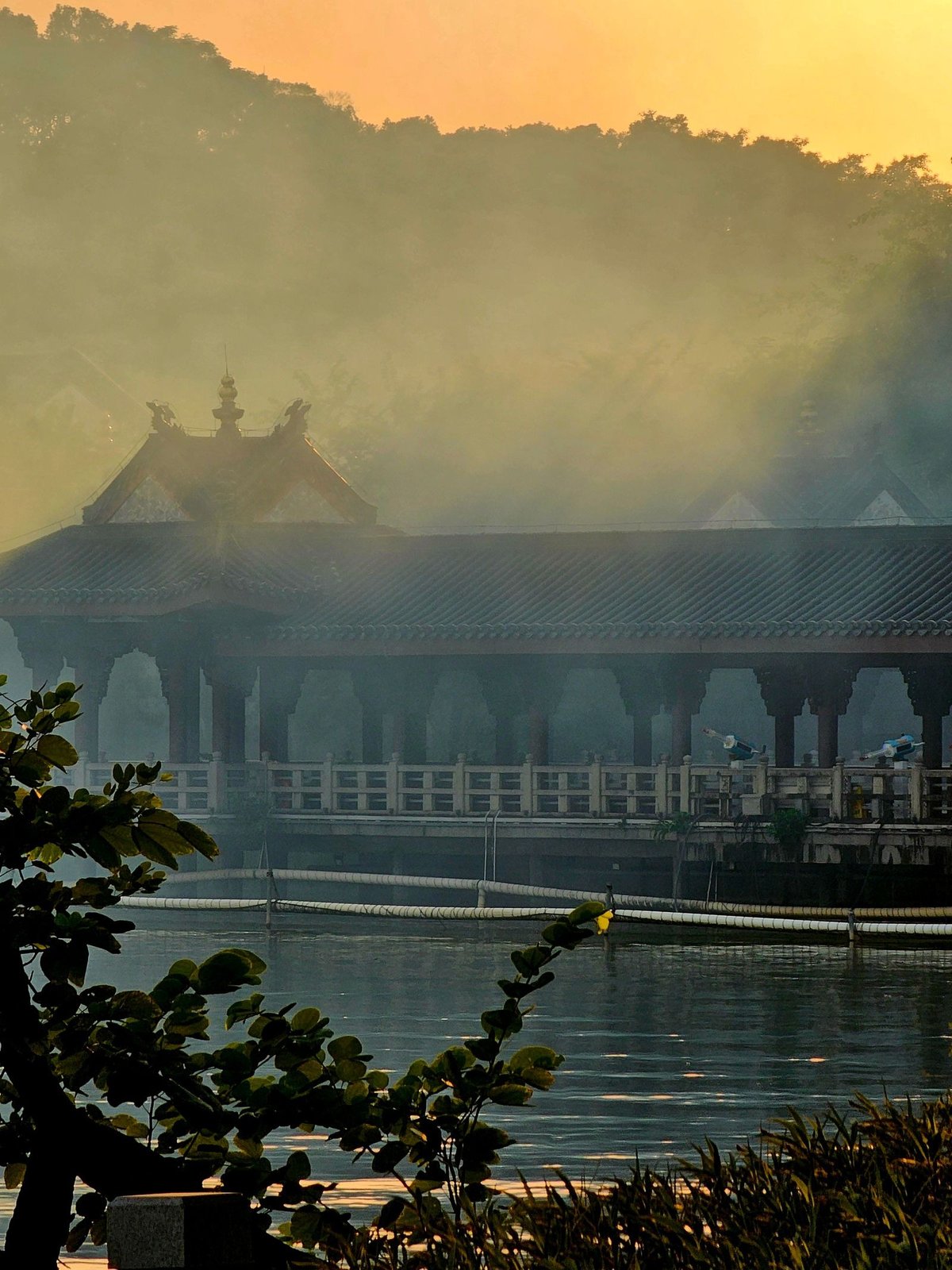
Huaqing Palace
A garden at the foot of Lishan where emperors bathed and, much later, a kidnapping changed Chinese history. Stay for the evening performance staged on the real hillside.
Rated for foreign travellers
Six things overseas visitors weigh most in China, scored 1 to 5. Based on what travellers actually ask about before they come.
- SafetyHow safe it feels
- 4.6
- Getting thereTransit convenience
- 3.7
- EnglishEnglish signs & staff
- 3.3
- PaymentsEasy to pay
- 4.4
- CleanClean & comfortable
- 4.3
- ValueWorth the money
- 4.2
Huaqing Palace sits at the foot of Mount Li, in the shadow of a hill that has been a place of hot springs and imperial retreats for well over two thousand years. The present site is a garden built over Tang pool foundations, with a much more recent layer of history laid on top: this is where the Xi’an Incident of 1936 took place.
Two histories in one garden
The Tang emperors came here for the hot springs, and the site is inseparable from the story of Xuanzong and Yang Guifei — the romance that The Song of Everlasting Sorrow retells. You can walk the excavated pool structures, see where the imperial bathing pavilions stood, and follow paths up the lower slopes of Lishan through pavilions and old trees.
Then the tone changes. A small complex of rooms preserves the site of the 1936 incident, when Zhang Xueliang and Yang Hucheng detained Chiang Kai-shek here and forced a policy shift in the civil war. It is an odd and genuinely moving juxtaposition: a pleasure garden and a place where modern Chinese history turned. Allow time for both rather than treating one as an appendix.
The performance
The Song of Everlasting Sorrow is staged in the evening on the hillside and the lake in front of it — a rare show where the landscape is the set rather than a backdrop. Costumes, water, light and the slope of the mountain all do work that a theatre cannot. Tickets start at around ¥238 (about $34), with higher tiers for better seats, and peak-season sessions sell out early.
Entry to the palace itself is ¥120 (about $17). If you are coming for the show only, check exactly what your ticket includes; combinations vary. Arrive while there is still light so you can see the garden before the performance begins, and eat beforehand — the interval food is not the reason to come.
Making a day of Lintong
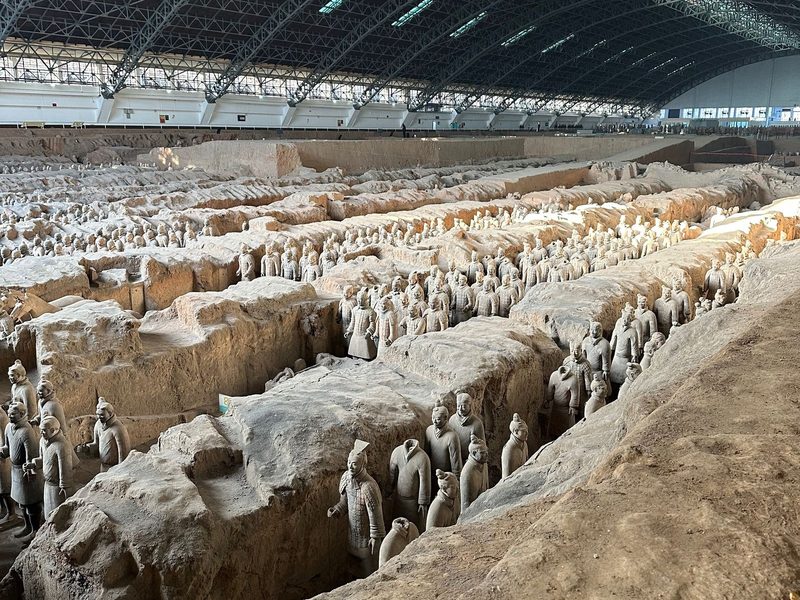
Huaqing Palace and the Terracotta Army are close together, roughly 40 km east of central Xi’an, and doing both in one trip is the sensible plan. Take bus 306 from the railway station or an official coach, see the army in the morning, then come here in the afternoon and stay for the show.
The practical catch is the way back. When the performance ends, several thousand people all want a taxi at once. Pre-book a car, or stay the night in Lintong — there is no shame in the second option, and it makes the long day much easier.
When to come
Spring and autumn are the comfortable seasons for walking the garden. Summer evenings are pleasant once the sun is down, though the site is busy. In winter the pools and the bare trees are quiet, and the show runs a reduced schedule, so check dates before you build a trip around it.
Before you go
Is the palace worth visiting without the show?
Yes, but the balance is different. The Tang pool ruins, the garden and the Xi'an Incident site make a useful two hours. The show is what turns it into a full day out.
How do I get there from the Terracotta Army?
The two sites are a few minutes apart by taxi or local bus, so most people do them in one trip out to Lintong. Bus 306 from Xi'an Railway Station and the official coaches both serve the area.
Do I need to book The Song of Everlasting Sorrow?
In peak season, yes — popular sessions sell out well ahead. Book through official channels, and arrange your ride back to Xi'an before the show ends, because taxis are scarce in the post-show rush.
More in Xi'an
Want a plan that fits your dates?
Tell us your dates, budget and what you actually like doing — we will send back a day-by-day plan by email. No charge for the first draft.
Plan with us →