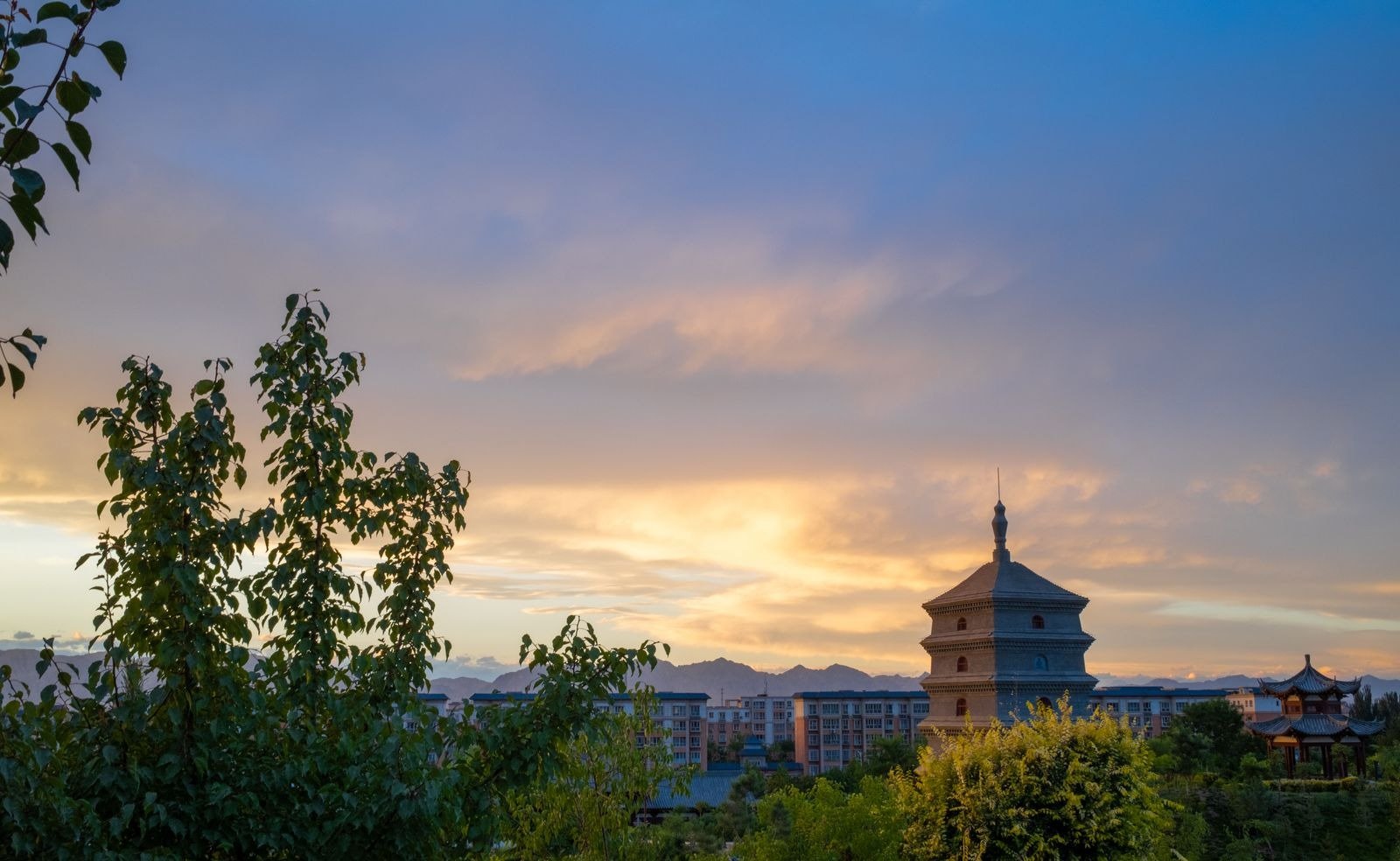
Giant Wild Goose Pagoda
A Tang pagoda built to hold the scriptures a monk carried back from India, now the anchor of a whole southern district — fountain square by day, Tang-lit street by night.
Rated for foreign travellers
Six things overseas visitors weigh most in China, scored 1 to 5. Based on what travellers actually ask about before they come.
- SafetyHow safe it feels
- 4.8
- Getting thereTransit convenience
- 4.7
- EnglishEnglish signs & staff
- 3.4
- PaymentsEasy to pay
- 4.6
- CleanClean & comfortable
- 4.3
- ValueWorth the money
- 4.1
The Giant Wild Goose Pagoda was built in 652 AD for a very practical reason: the monk Xuanzang had walked to India and back with hundreds of Buddhist texts, and they needed somewhere safe to store and translate them. The brick tower built for that purpose still stands in the southern part of Xi’an, a plain, square, seven-tiered structure that has survived earthquakes and centuries of rebuilding without losing its shape.
It is a World Heritage site as part of the Silk Roads property, which is the right framing — this is a monument to a journey. Xuanzang’s route west is the reason the pagoda exists, and the city around it is the eastern end of that road.
The square does a lot of the work
For most visitors the best part is not inside the temple at all. The huge square to the north of the pagoda is free, with a broad stone axis, sculpture groups and a fountain basin that draws a crowd every evening. The scheduled fountain performances change with the season, so read the board when you arrive rather than trusting an old guidebook.
Around the square, the early evening is when Xi’an’s Tang revival is at its most theatrical — families in costume, light on the tower, the fountain going through its paces. It is cheerful and thoroughly modern, but the pagoda behind it is real, and that combination is the point.
Inside the temple
The Da Ci’en Temple complex around the tower is quieter than the square. Entry is around ¥50 (about $7.1), with another ¥30 (about $4.3) to climb the pagoda, though both should be confirmed on site. The climb is a series of steep internal stairs and the reward is a view of the surrounding streets rather than anything historic — if vertical steps are not your idea of a holiday, skip it and spend the time in the courtyard instead.
What is worth looking at is the masonry itself. The eaves, the niches and the way the tiers step inwards are Tang vocabulary translated into brick, and they reward a slow circuit from the ground far more than a rushed trip to the top.
The southern district after dark
From the temple, walk south through the landscaped corridor toward Datang Everbright City. It takes ten to fifteen minutes on foot, and it is one of the best short walks in the city: Tang-style gateways, statues, pools and the pagoda receding behind you. By full dark the two areas merge into a single illuminated strip.
Practicalities
The pagoda is on Metro Lines 3 and 4, so it is easy to reach from anywhere in the centre. Allow an hour and a half for the temple and square, or make an evening of it and continue south for dinner and the street performances. The square gets very busy at weekends and on holiday evenings; arrive before the lights come on if you want space to photograph the tower.
Combine it with the Shaanxi History Museum, a short distance west — the museum and the pagoda make a coherent half day, and both are at their best when you are not rushing to the next thing.
Before you go
Is it worth paying to climb the pagoda?
The stairs are steep and narrow and the view from the top is mostly modern Xi'an. Do it once if you like old masonry; otherwise the courtyard and the square outside give you the better picture. Check the current price on site.
When is the fountain show?
Performances run in the evening and the schedule changes with the season, so check the board at the square on arrival. The square itself is free and open from early morning, and the pagoda looks good in daylight too.
How does it connect to Datang Everbright City?
Walk south from the temple through the Tang-style landscape corridor. It is a ten to fifteen minute stroll, and by the time the lights are on the two places feel like one very long Tang-themed street.
More in Xi'an
Want a plan that fits your dates?
Tell us your dates, budget and what you actually like doing — we will send back a day-by-day plan by email. No charge for the first draft.
Plan with us →