The Night Chang'an Came Back
Datang Everbright City is free, crowded and completely theatrical. It is not the real Tang dynasty — but walking it after the museum, you understand why the city built it.
The walk south starts quietly
I had spent the morning at the Shaanxi History Museum, looking at Tang gold, Tang mirrors and the painted figures of foreigners who once walked into Chang’an. In the late afternoon I came out and walked south from the Giant Wild Goose Pagoda through the landscaped corridor toward Datang Everbright City.
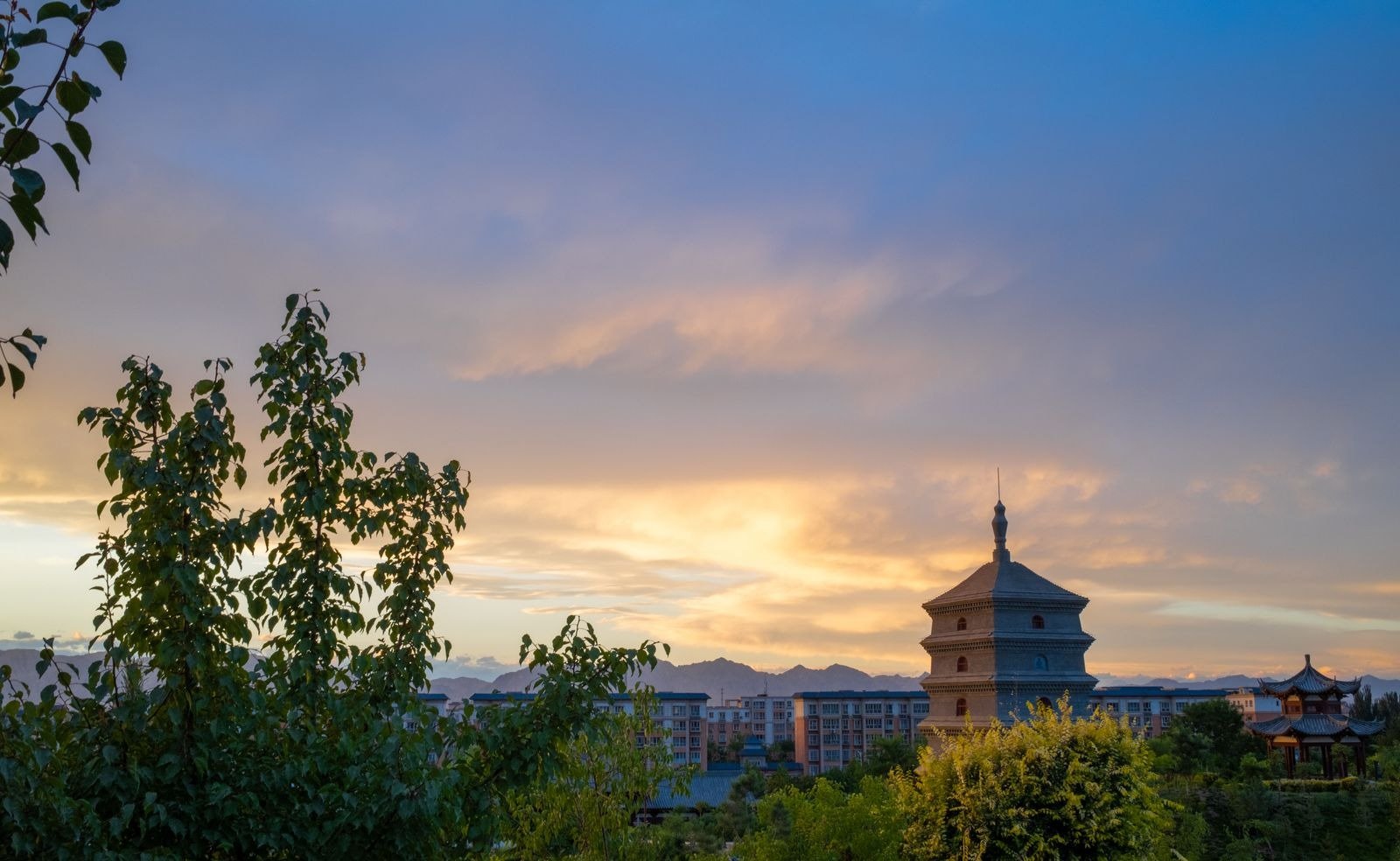
For the first few minutes it is just a pleasant park path: stone, water, low walls, the pagoda rising behind. Then the lights come on, and the whole thing changes gear. Sculpture groups pick out figures in costume, the facades along the street glow, and a crowd that has been gathering all evening starts moving south with you.
The street performs for you
Datang Everbright City is a free outdoor street, and its entire purpose is performance. There are singers on platforms, drummers, actors in Tang costume and the famous “tumbler” figure who sways without falling, surrounded by a ring of people holding up phones. Nobody charges admission. You simply stand where you can see and wait for the next thing to start.
What surprised me was how good-natured it is. Ten thousand people are packed into a street, everyone is taking photographs, children are wearing borrowed hanfu with elaborate hairpieces, and there is remarkably little pushing. A family let me stand in front of them for a photo, then asked me to take theirs. It felt like a festival that happens every night.
The version of history on show
Let me be honest: this is not a reconstruction. The Tang here is a theme, done with light and costumes and pop music. The real Tang objects are in the museum a few streets west, and they are smaller, stranger and more interesting than anything on this avenue.
But walking the street after seeing those objects changed how I read it. The foreign merchants in the museum’s ceramic figures, the horses, the music, the confidence — all of it is what the city is referencing with its neon pagodas and costumed actors. Xi’an is not pretending the Tang dynasty survived. It is celebrating the fact that it happened here, in the loudest way it knows.
What to do with it
Go after dark, around seven or eight, and give it two hours. Walk from the fountain square south rather than starting in the middle, so the pagoda is behind you when the street opens up. Renting a Tang costume and having photographs taken is popular here — ask about the full price and whether you get all the images before you agree.
Expect a crowd. On weekends and holidays the street moves at a shuffle, and the best things to watch need a spot near the front half an hour early. There is no entry fee, so you can walk away at any point; the trick is to arrive without a list of performances to tick off.
Why I remembered it
Back at the hotel I could still hear the drums through the window. The next morning I went to Shajinqiao for breakfast, and the contrast was complete — steam and old men and bowls of soup, with no light show at all. Both are Xi’an. One is the city showing off its history; the other is the city simply continuing it.
Related

A Chongqing Night in Nine Squares
Hotpot is not a meal here; it is how a Chongqing day ends. Learn the nine-grid pot and the order of the dishes and you have actually eaten hotpot.
A Shanghai Morning Before the Cafés Open
Visitors are still asleep when the local market is already winding down. Join the queue at a stall, watch a bunch of spring onions being weighed, and you have brushed up against a real Shanghai morning.
A Slow Morning on Pingjiang Road
A noodle shop at seven, an empty stone street before nine, a boat on the water. The best thing about Pingjiang Road is not any one shop — it is that you can take a whole morning at your own pace.
Want a plan that fits your dates?
Tell us your dates, budget and what you actually like doing — we will send back a day-by-day plan by email. No charge for the first draft.
Plan with us →