On the City Wall, Nanjing Gets Quieter
Climb Zhonghua Gate near sunset and the tour groups have gone. The brick is cool, wind passes through the barbican, and Nanjing becomes a city you can hear.
Go after the crowds leave
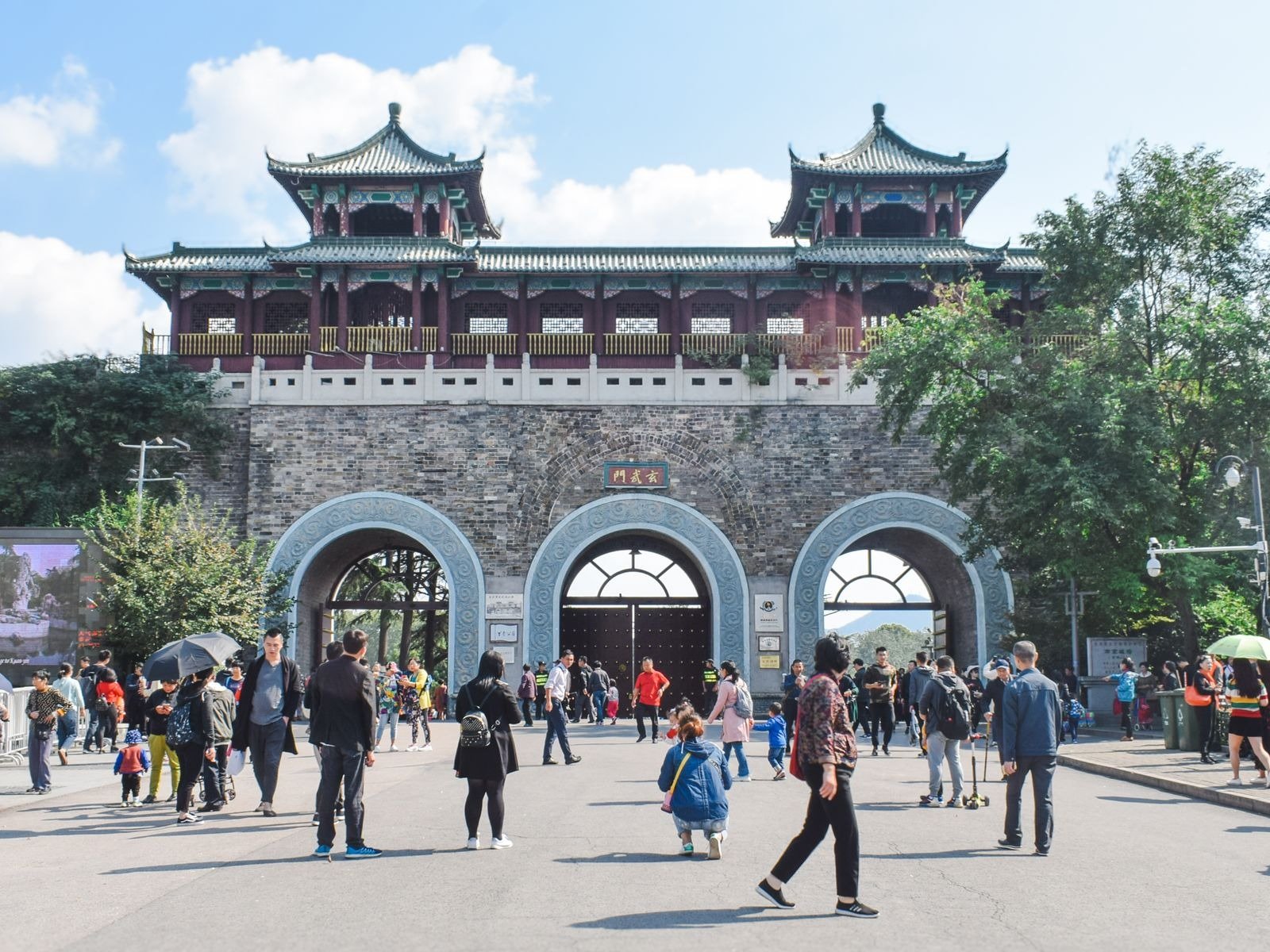
Zhonghua Gate is busy in daylight. Coaches pull up, people walk through the four layers of archway, take two photographs and move on. Near sunset the line simply disappears, and wind is all that is left in the gate passage.
Go up then. Entry is ¥50 (about $7.1), and the wall is almost yours.
The names on the bricks
The wall top is wide enough for three or four people abreast. Look down at the bricks: some still carry carved characters — a place name, a kiln worker’s name, a supervising official’s name. When the first Ming emperor built this wall, bricks were tracked by quality. A bad batch could be traced back through the names.
Six centuries of grass have come and gone in the joints. The names remain.
Looking in, looking out
From the top, the old city’s roofs lie on one side and the roads and trees outside on the other. This was never decoration. It was a hard boundary: inside and outside, defence and attack.
To the east you can make out the shape of Purple Mountain; to the north, the Taicheng section of the wall by Xuanwu Lake. The good thing about Nanjing is that these places are close without being crowded into one frame. You have to walk to connect them.
When you come down
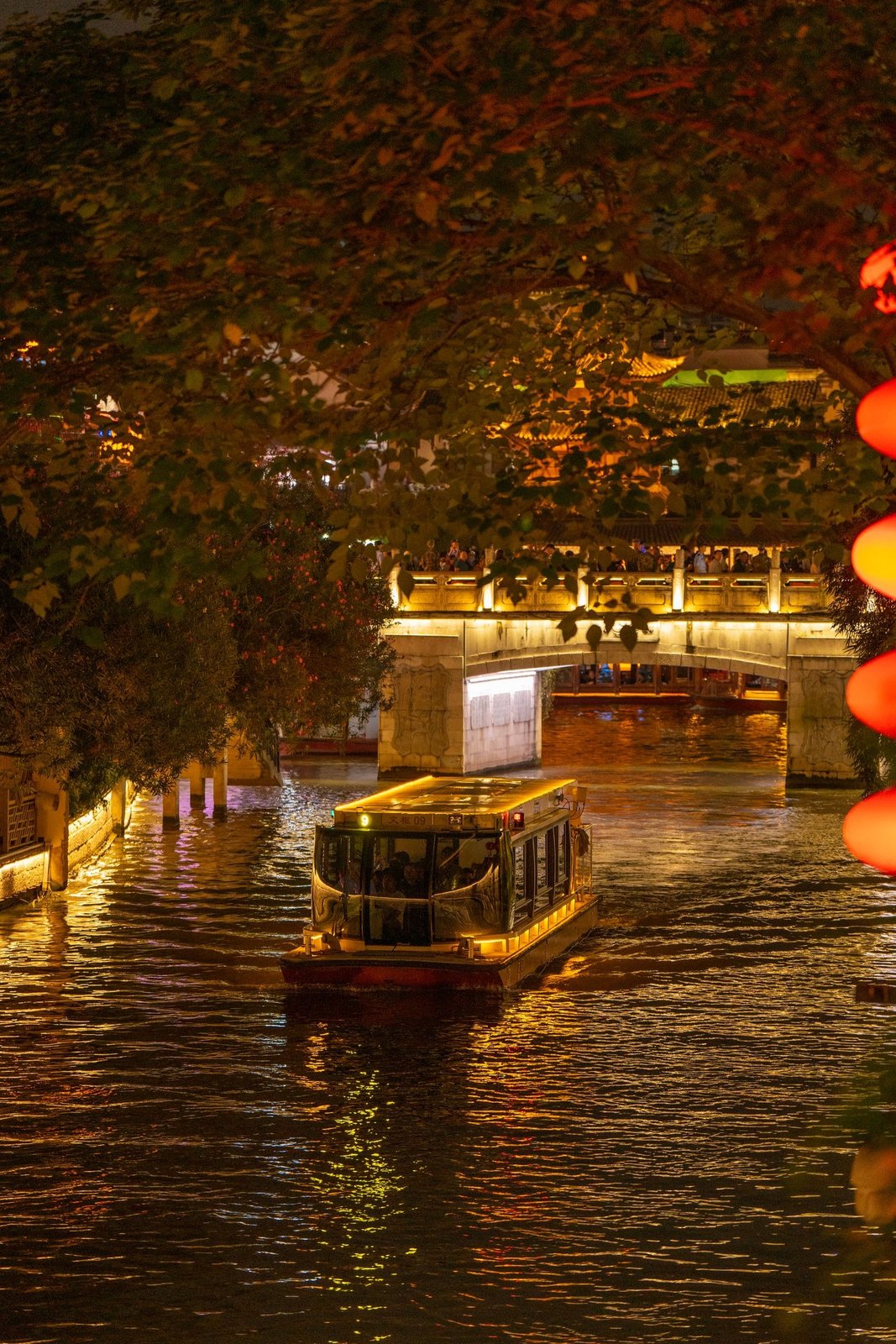
It is nearly dark by then, and the lights come on in Laomendong. Eat wontons or half a salted duck in the lanes, then walk a stretch of the Qinhuai River. The wall shows you the structure; the river shows you the life. You need both to call the day complete.
In short
Nanjing’s sights are good in daylight. The wall should be seen at dusk — not because the photographs are better, but because only then does it feel like a wall again.
Related

A Chongqing Night in Nine Squares
Hotpot is not a meal here; it is how a Chongqing day ends. Learn the nine-grid pot and the order of the dishes and you have actually eaten hotpot.
A Shanghai Morning Before the Cafés Open
Visitors are still asleep when the local market is already winding down. Join the queue at a stall, watch a bunch of spring onions being weighed, and you have brushed up against a real Shanghai morning.
A Slow Morning on Pingjiang Road
A noodle shop at seven, an empty stone street before nine, a boat on the water. The best thing about Pingjiang Road is not any one shop — it is that you can take a whole morning at your own pace.
Want a plan that fits your dates?
Tell us your dates, budget and what you actually like doing — we will send back a day-by-day plan by email. No charge for the first draft.
Plan with us →