Wuhou Shrine
A shrine to Zhuge Liang next to the tomb of Liu Bei. The path between red walls and bamboo stays with you longer than the statues inside.
Rated for foreign travellers
Six things overseas visitors weigh most in China, scored 1 to 5. Based on what travellers actually ask about before they come.
- SafetyHow safe it feels
- 4.7
- Getting thereTransit convenience
- 4.7
- EnglishEnglish signs & staff
- 3.8
- PaymentsEasy to pay
- 4.5
- CleanClean & comfortable
- 4.5
- ValueWorth the money
- 4.3
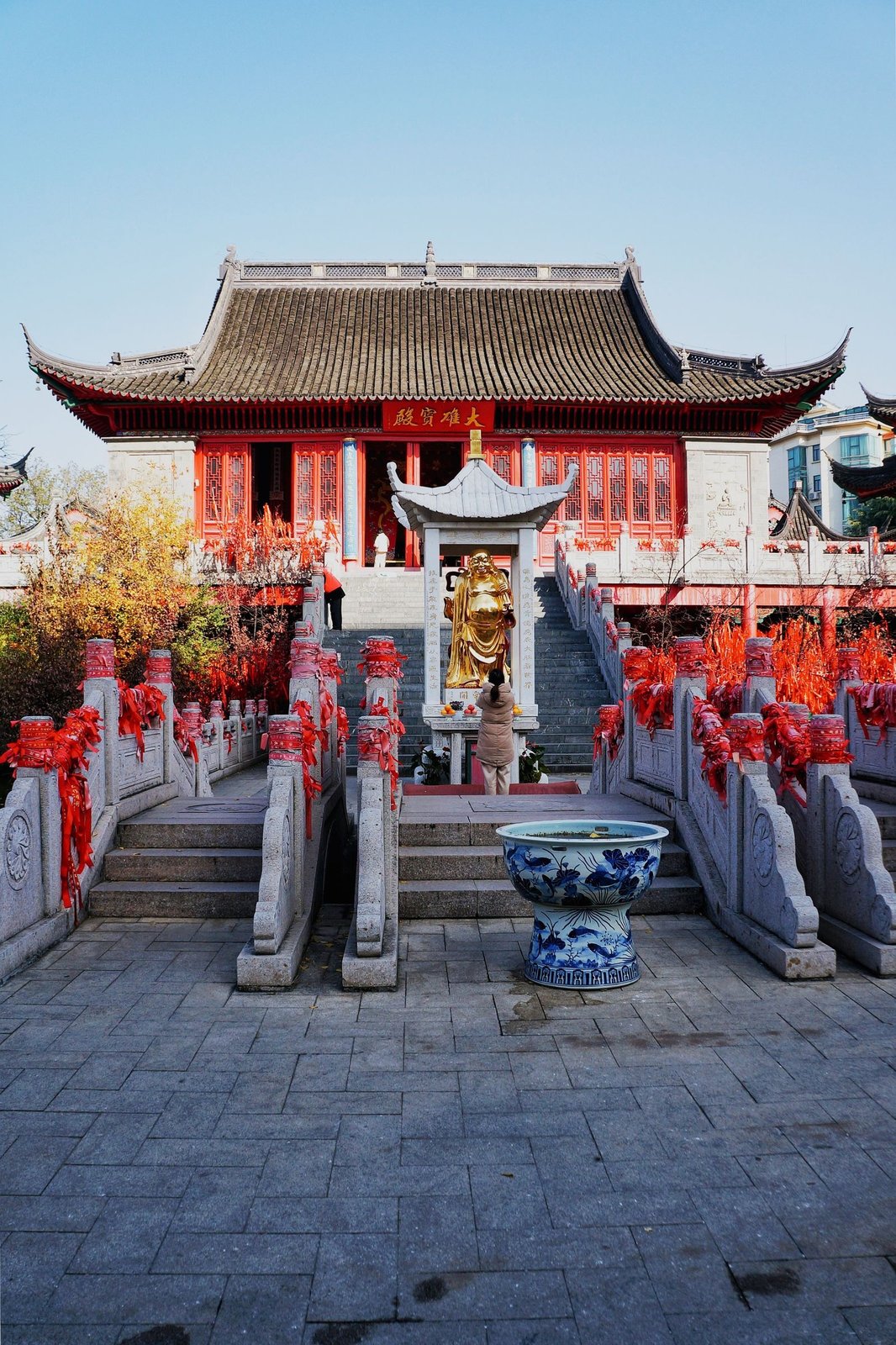
Wuhou Shrine honours Zhuge Liang and stands beside the tomb of Liu Bei — one of the few places where a ruler and his minister are worshipped together. You enter into red walls and grey tile, courtyard opening into courtyard, with old trees throwing shade across the brick.
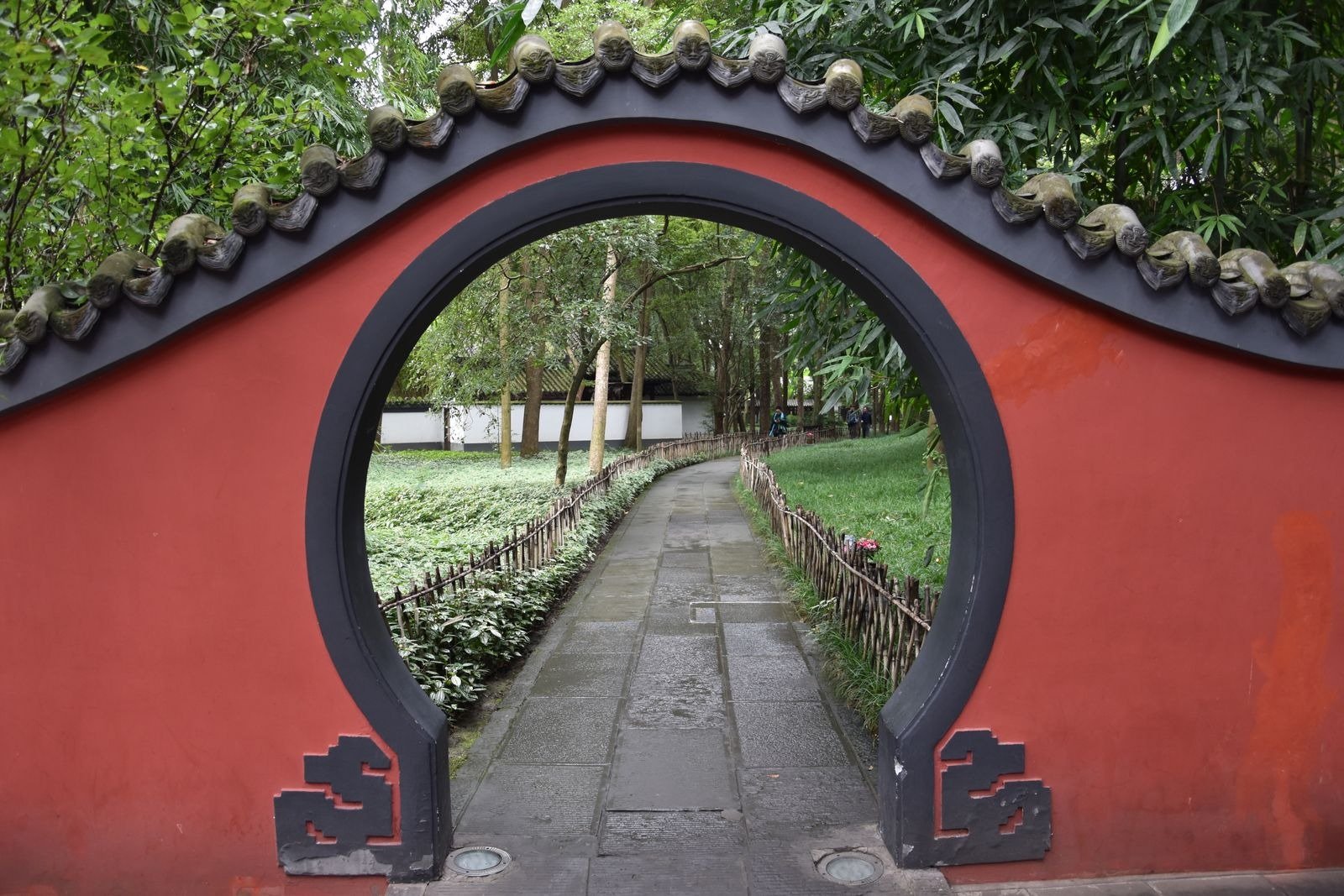
The path between the walls
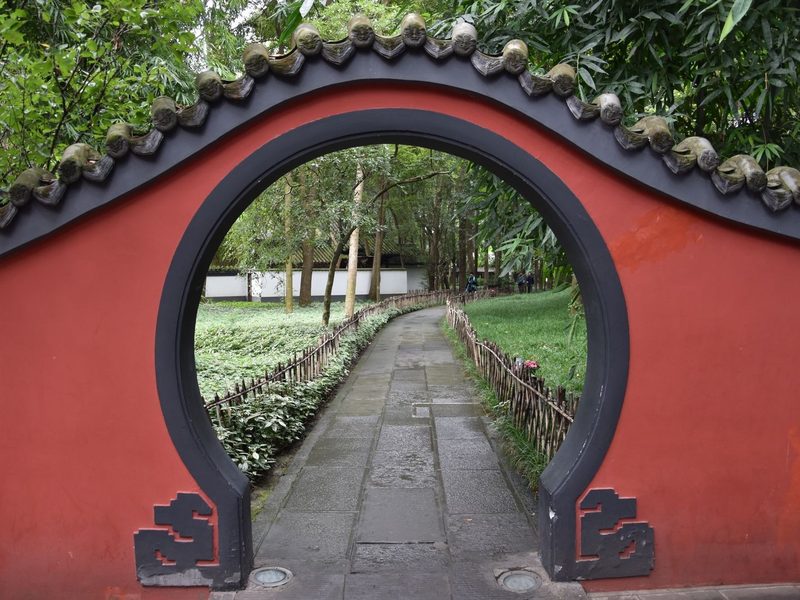
What most people remember is a narrow path with a red wall on one side and bamboo on the other. The wall is deep red, leaves lean over the top, and light comes through in strips. There is usually a queue of people taking photographs, but the walk itself takes two minutes — standing at the foot of the wall and listening to the wind in the bamboo is better than holding up a phone.
The statues inside are arranged by Three Kingdoms figures — Liu Bei, Zhuge Liang, Guan Yu, Zhang Fei. You do not need the background to enjoy the calligraphy on the plaques and couplets, which is direct and well done. An audio guide makes more sense than trailing a tour group.
Straight out into Jinli
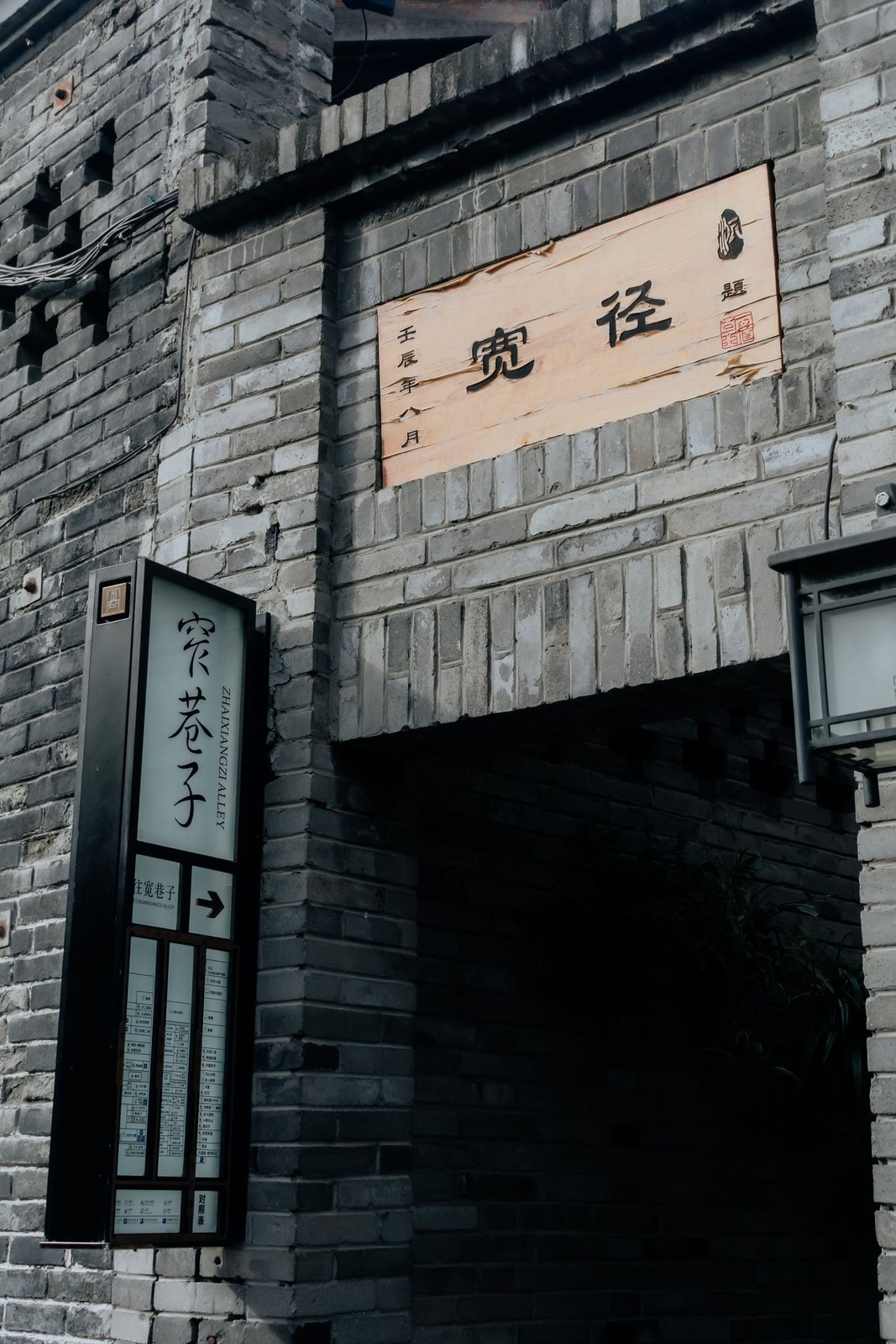
Jinli begins at the shrine’s exit, a restored street of snack stalls and souvenirs. It is commercial, plainly, but a bowl of dan dan noodles and a sugar painting after the courtyard feels about right. The lanterns go on at dusk and the photographers come out.
Wuhou Shrine and the Du Fu Thatched Cottage are on the same line, twenty minutes apart by metro and bus. Shrine in the morning, cottage in the afternoon, dinner back at Kuanzhai Alley is the cleanest one-day route in the centre.
Practical notes
Admission is ¥50 (about $7) and one to two hours is plenty. Take the metro to Gaoshengqiao and walk. The quietest hours are before ten in the morning and after four thirty; around midday on holidays it is barely possible to move.
Before you go
How do I visit Wuhou Shrine and Jinli?
Jinli starts right beside the shrine, so no transport is needed. See the shrine in the morning, eat on Jinli at noon and keep walking; half a day covers it.
What is the admission?
¥50 (about $7). It gets busy on holidays, so arrive before ten to avoid the tour groups.
Is it worth it without knowing the Three Kingdoms?
Yes. Even without the stories, the red walls and the garden are worth the walk. An audio guide helps with the couplets and statues.
More in Chengdu


Want a plan that fits your dates?
Tell us your dates, budget and what you actually like doing — we will send back a day-by-day plan by email. No charge for the first draft.
Plan with us →