Dujiangyan
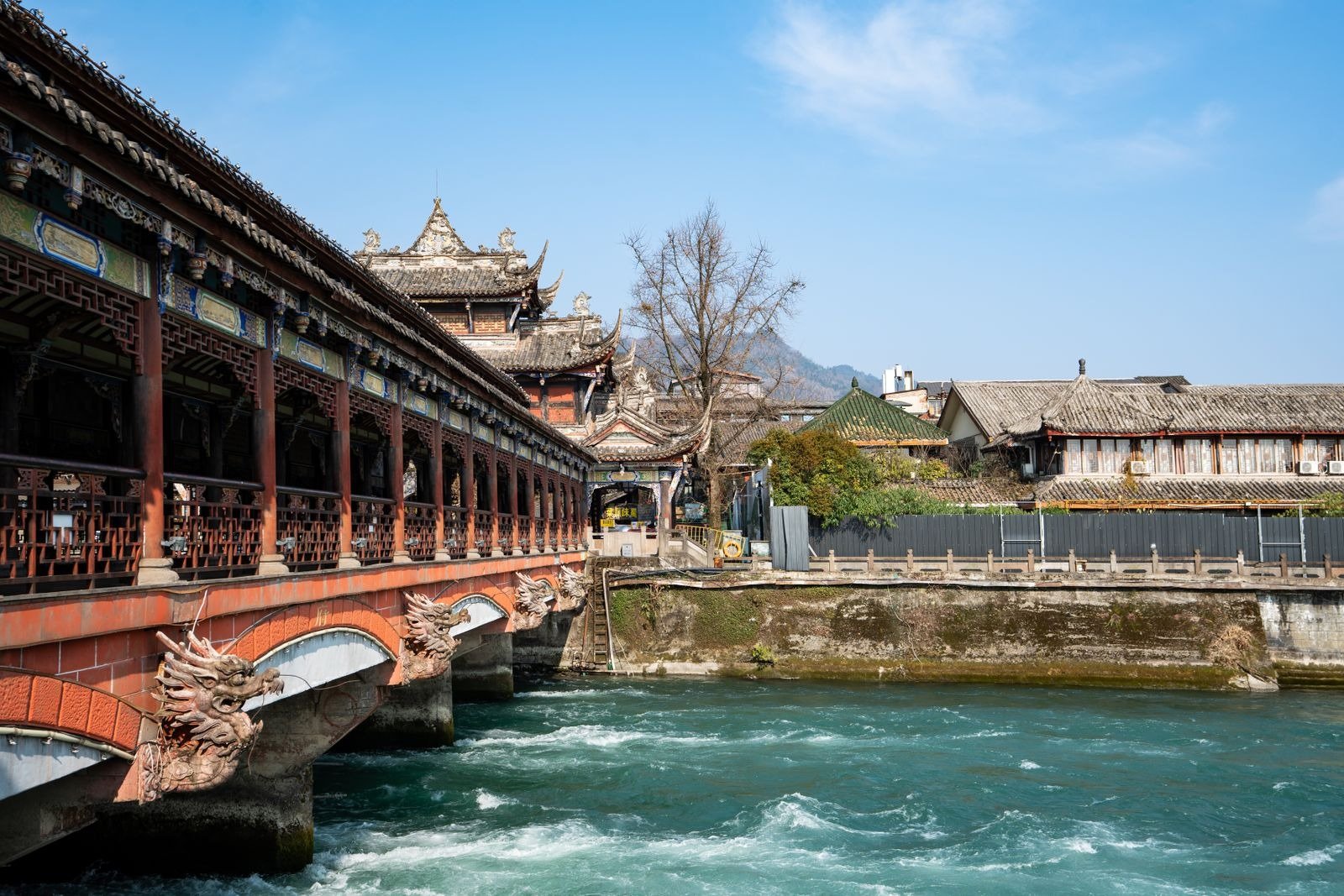
The Min River is split into inner and outer channels by a system built before the common era that still irrigates the Chengdu plain. Come to see how the water moves, not for replica buildings.
Rated for foreign travellers
Six things overseas visitors weigh most in China, scored 1 to 5. Based on what travellers actually ask about before they come.
- SafetyHow safe it feels
- 4.6
- Getting thereTransit convenience
- 4.2
- EnglishEnglish signs & staff
- 3.6
- PaymentsEasy to pay
- 4.2
- CleanClean & comfortable
- 4.4
- ValueWorth the money
- 4.6
Dujiangyan does not explain an ancient engineering project — it is one, still running. The Min River comes down out of the mountains, the Fish Mouth divides it in two, the inner channel feeds the Chengdu plain and the outer one carries floodwater and silt away. Two thousand years on, the fields still use that water.
Watch the water first
Most people look for old buildings first, but the thing to study is the direction of the flow. Near the Fish Mouth, one channel runs muddy and heavy while the other is clearer; the division is laid out in front of you. The Flying Sand Weir throws silt out, and the Bottle-Neck Channel limits how much water enters. Understanding those three pieces beats reading the panels one by one.
The Anlan suspension bridge crosses the river on wooden planks that sway, with cables humming overhead and the rapids visible below. If heights bother you, hold the rope and cross slowly — there are people waiting at both ends for photographs.
Combine it with Qingcheng Mountain
Dujiangyan and Qingcheng Mountain sit on the same line. Take an early train, spend the morning at the weir, climb the front slopes of Qingcheng in the afternoon and return to Chengdu for hotpot in the evening. For an easier day, finish at the weir and have a bowl of bean curd in the old town before heading back.
There are few steps inside the site, mostly riverside paths, so wear shoes with grip. In summer the water is loud and high; mind your footing near the embankment.
Practical notes
Admission is ¥80 (about $11); Qingcheng Mountain is charged separately. Trains are frequent, so book ahead on holidays. Cheap day tours sold at the gate often include shopping stops — book through a proper platform instead. Dujiangyan is a little cooler than the city and windy by the river, so bring a light layer.
Before you go
How do I get there from Chengdu?
Take the intercity train from Xipu station to Lidui Park station, about thirty minutes, then walk fifteen minutes to the site. Buses also leave from Chadianzi terminal.
How much time does it need?
Half a day covers the Fish Mouth, Flying Sand Weir, Bottle-Neck Channel and Anlan suspension bridge. Add Qingcheng Mountain and give it a full day.
Is it good for children?
Yes, though there is little hands-on displays. Explain it as "splitting a river in two" and the bridges and rapids do the rest.
More in Chengdu
Want a plan that fits your dates?
Tell us your dates, budget and what you actually like doing — we will send back a day-by-day plan by email. No charge for the first draft.
Plan with us →