Shanghai Breakfast, Watching the Steam Come Out
Soup dumplings first, pan-fried buns next, scallion oil noodles as the everyday choice. An honest record of eating breakfast in Shanghai, with the order and the traps.
The three-piece breakfast
Xiaolongbao, pan-fried pork buns and scallion oil noodles — a Shanghai day starts with one of these. Visitors head straight for the soup dumplings, but scallion oil noodles are the everyday food: around ¥15 (about $2.1), on the table in two minutes, gone in as many.
By half past seven the neighbourhood stalls are open. Steamers stack up, white vapour escaping at the seams, and the flat pan hisses with frying buns. This is more real than any famous shop.
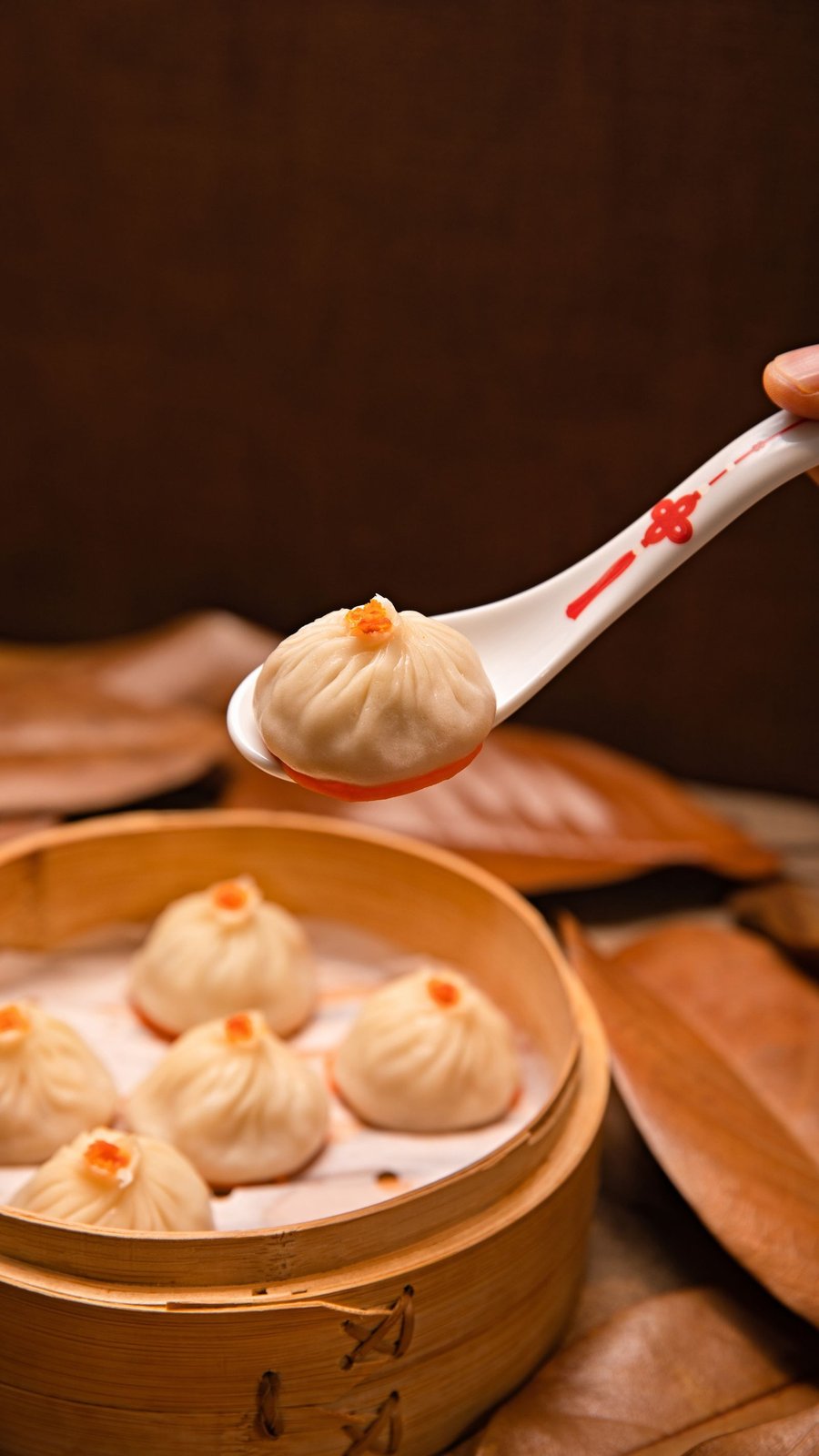
Soup dumplings: drink first, eat second
Order pork or crab roe. For a first try, take pork — ¥20–30 (about $2.9–4.3) a basket, thin skin, a pocket of soup inside. Crab roe costs more and tastes heavier; not everyone likes it first thing.
The technique matters. Pick one up, bite a small hole in the wrapper, lower your head and drink the soup, then put the rest in your mouth. Stuff the whole dumpling in and the soup will overflow — nearly everyone burns their tongue once. A little vinegar and shredded ginger cut the richness.
A basket holds four to six. Two people need one basket plus something else, not three baskets.
Pan-fried buns: judge the bottom
These are small buns cooked in a flat pan: crisp underneath, soft on top, soup inside, sprinkled with sesame and spring onion, ¥8–12 (about $1.1–1.7) for four. Two tests: the base should be crisp but not hard, and the soup should be generous without leaking.
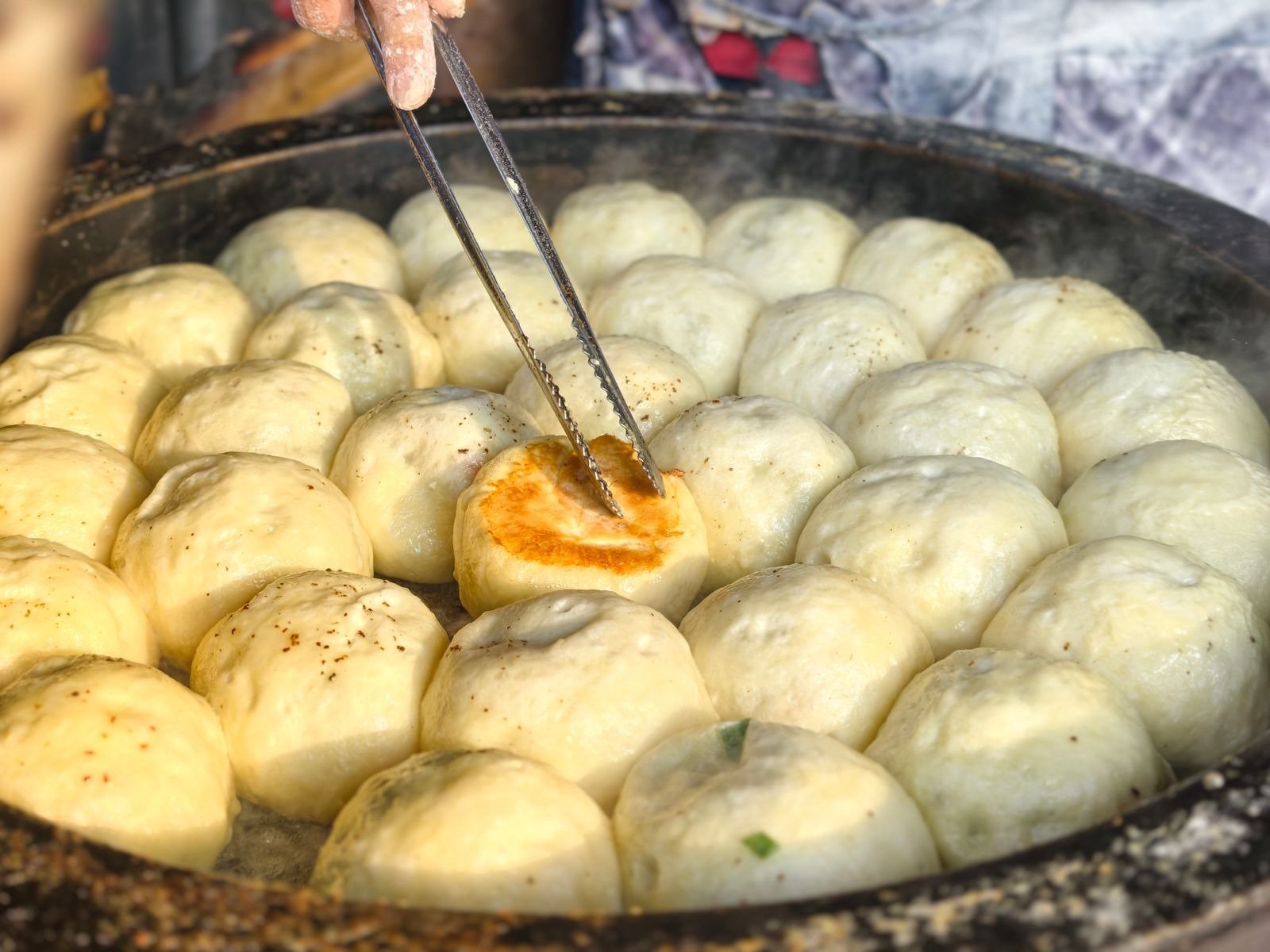
Eat them the moment they come out — the soup shrinks as they cool. When the cook turns a bun with tongs and the pan contents wobble, that batch is right. Buy a paper bag and walk with it; the first bite is hot again, so wait a few steps.
Scallion oil noodles: the cheap bowl
It looks simple — noodles, scallion oil, dried shrimp, sometimes greens. The point is the oil, cooked slowly until the scallions turn nearly black and the fragrance deepens. At ¥15 (about $2.1) it is the real weekday breakfast of this city.
Toss it while hot; cold noodles clump. Soy milk or a fried egg alongside makes a few-yuan breakfast last all morning.
Where to eat
Check the board at tourist-area shops; near stations and sights breakfast often costs ten or twenty per cent more. The stalls under residential blocks are the safest bet — they live on repeat customers and cannot afford to cut corners.
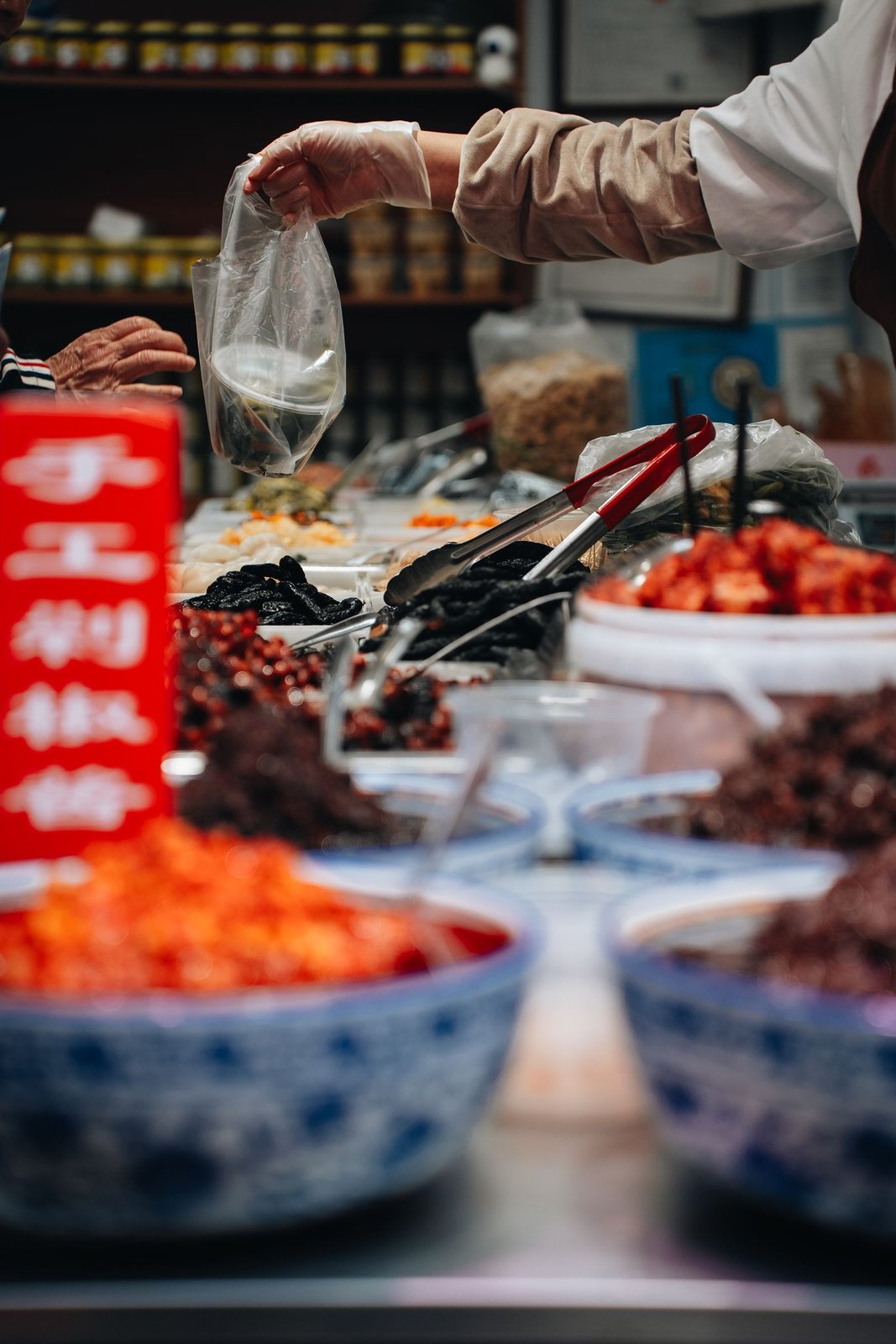
To try all three at once, sit down at a local breakfast shop: one basket of xiaolongbao, one order of pan-fried buns, two bowls of noodles, ¥60–80 (about $8.6–11) for two. The busiest window is seven to nine; many stalls pack up by ten, so don’t sleep in.
Common questions
How do I eat soup dumplings without scalding myself?
Bite a small hole, suck out the soup, then eat the wrapper and filling. Putting the whole thing in your mouth guarantees a burn. Vinegar and ginger are optional.
How much should two people order?
One basket of xiaolongbao at ¥20–30 (about $2.9–4.3), four pan-fried buns at ¥8–12 (about $1.1–1.7), and two bowls of noodles at ¥30 (about $4.3) — about ¥60–80 (about $8.6–11) total.
Do I need the most famous shop?
No. The famous ones queue from early morning. Stalls under residential blocks are often steadier and cheaper.
Related

The Terracotta Army, With and Without a Guide
I did the Terracotta Army twice, once cold and once with an official guide. The difference was not trivia — it was the difference between seeing clay statues and understanding an army.
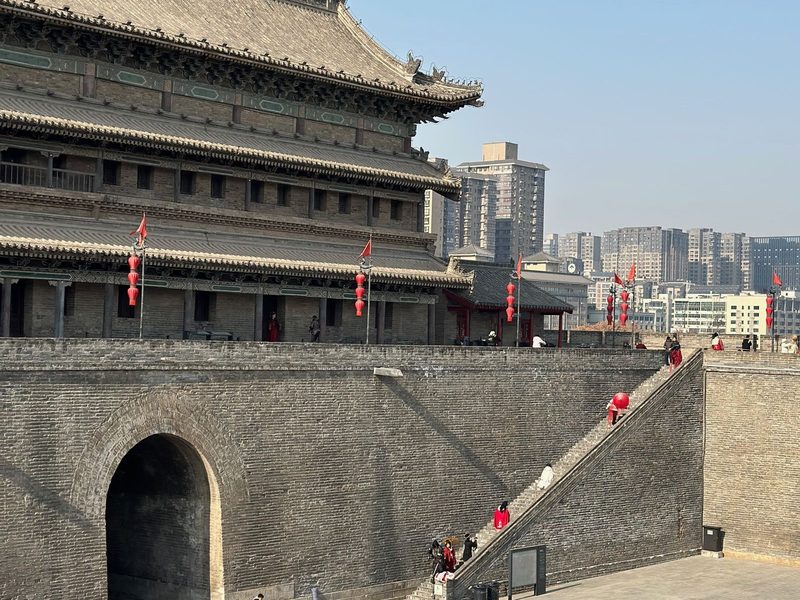
Cycling Xi'an City Wall, Minus the Romance
Everyone tells you to cycle the wall at sunset. They leave out the rental clock, the wind and the fact that the last half is mostly about finishing. Here is how to do it without hating it.
Chengdu Hotpot, How to Order a Red Oil Pot
Seconds for tripe and duck intestine, whether a split pot is embarrassing, an honest record from queue to bill.
Want a plan that fits your dates?
Tell us your dates, budget and what you actually like doing — we will send back a day-by-day plan by email. No charge for the first draft.
Plan with us →