Pingjiang Road
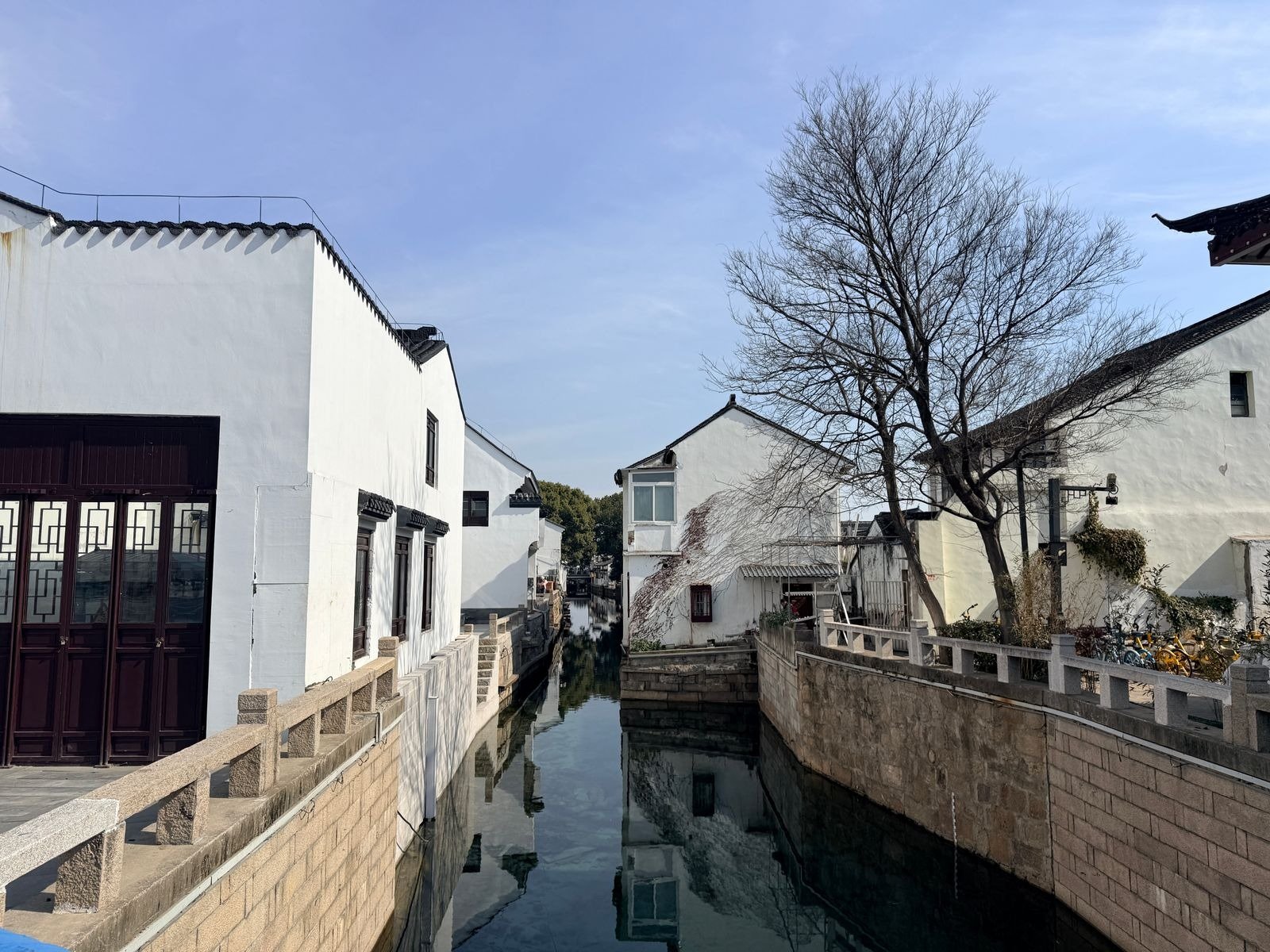
One of Suzhou's best-preserved old districts. The canal runs along one side with whitewashed houses against the water; the other is lined with bookshops, pastry stores and teahouses. Free, and best walked in the morning.
Rated for foreign travellers
Six things overseas visitors weigh most in China, scored 1 to 5. Based on what travellers actually ask about before they come.
- SafetyHow safe it feels
- 4.9
- Getting thereTransit convenience
- 4.8
- EnglishEnglish signs & staff
- 4.0
- PaymentsEasy to pay
- 4.7
- CleanClean & comfortable
- 4.3
- ValueWorth the money
- 4.8
Pingjiang Road is the stretch of old Suzhou I keep coming back to. It follows a narrow north–south canal, with whitewashed houses and stone railings on one bank and shops on the other. The paving is stone, the lane is narrow, there are trees overhead, and late in the day the light turns soft.
The canal and the bridges are the point
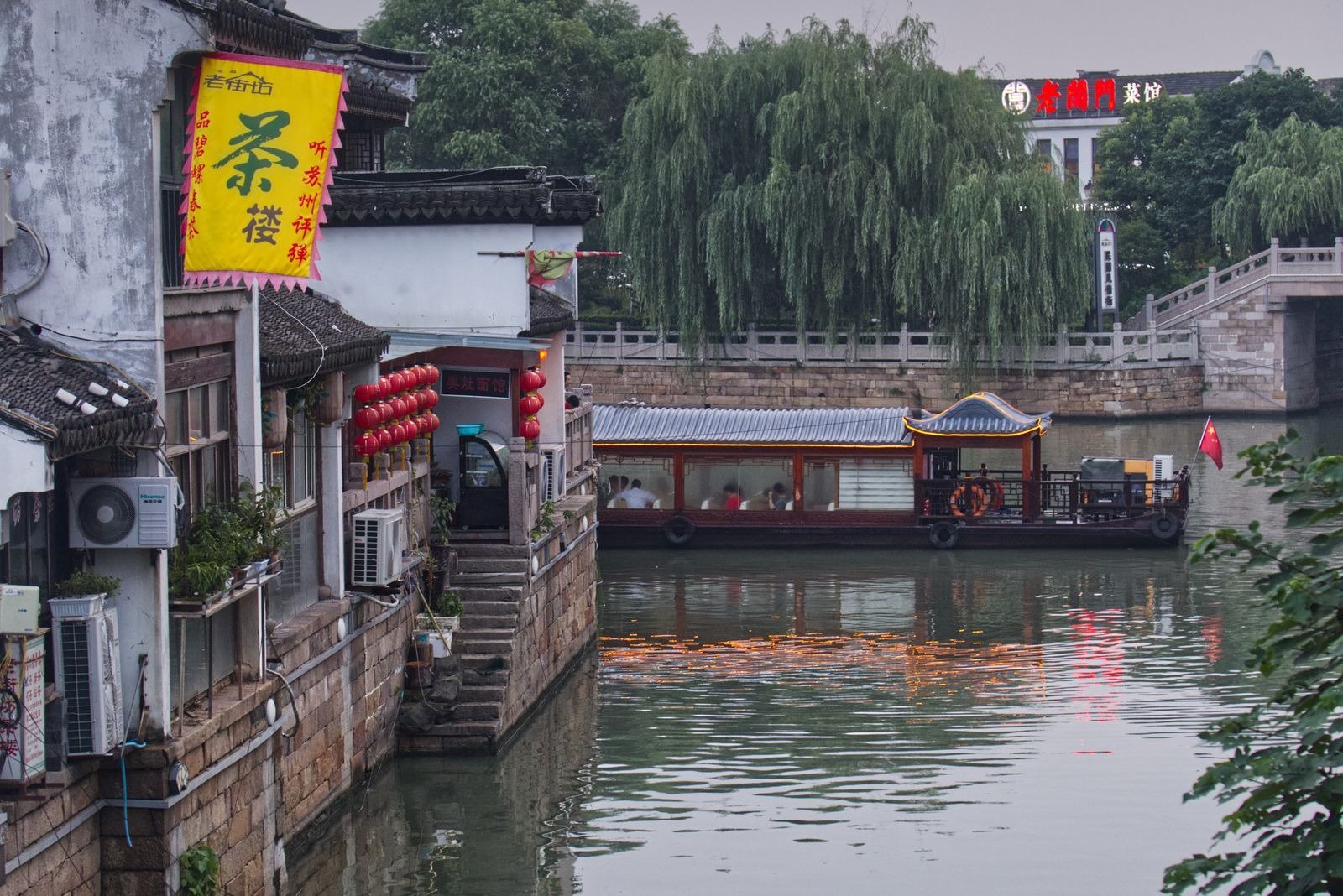
Don’t just watch the shops. There are several small stone bridges; stand in the middle of one and look north and you can take in the waterway, the houses on both banks and the old water gate in the distance. Look down and there are reflections and fish. Before nine the surface is at its stillest, and now and then a small boat rows past.
For another angle, take a rowing boat for about ¥50 (about $7.1). The boatwoman works an oar at the stern and passes under the bridge arches; the street seen from the water is a different street. Boats stop at several landings, so it doubles as a rest when your feet give out.
Shops and things to eat
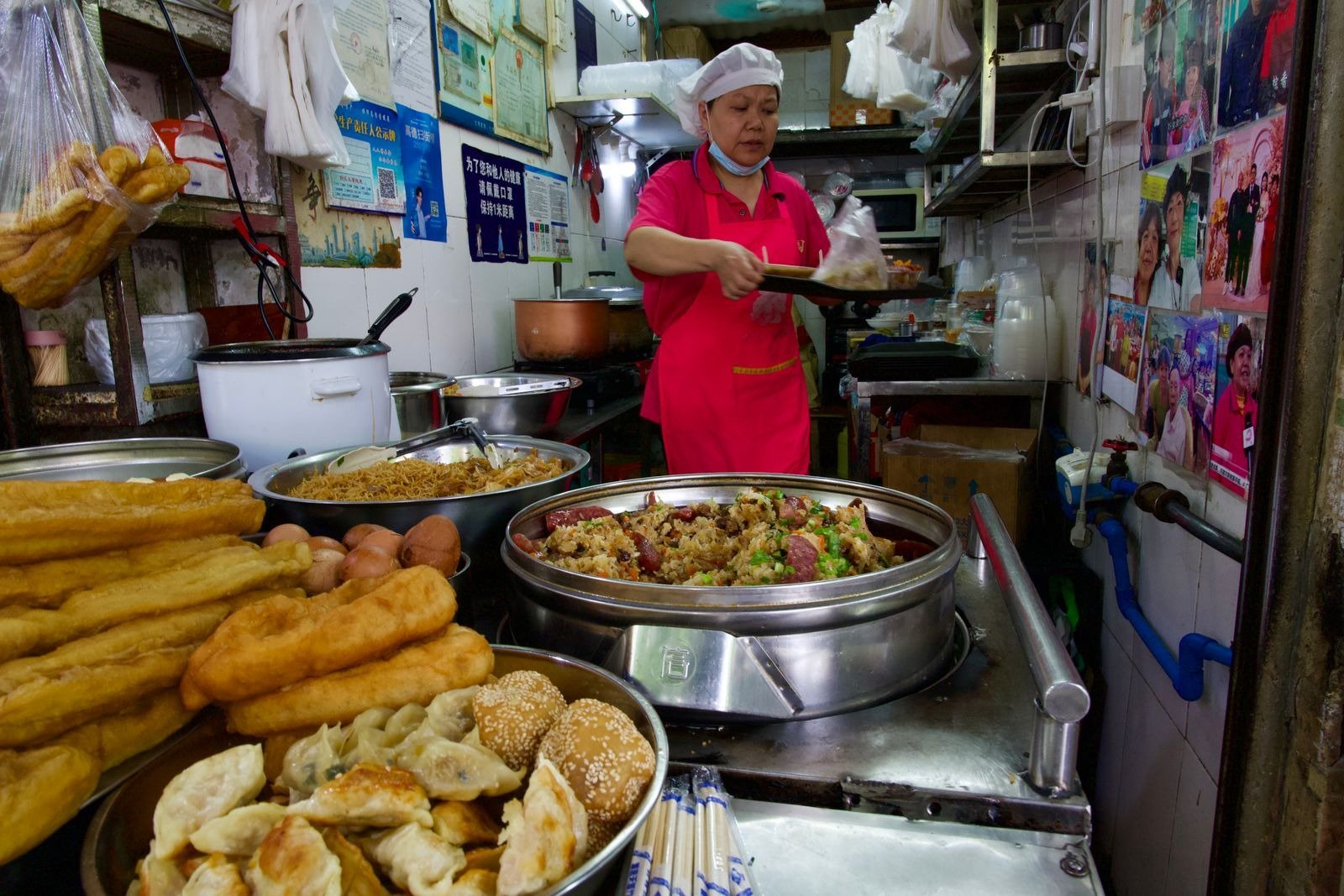
The shops are happily mixed: second-hand bookstores, Suzhou pastry shops, small stores selling folding fans and postcards. For food, a begonia cake is ¥8 (about $1.1) — crisp caramel outside, red bean paste within. Plum-blossom cakes and sock-sole biscuits are common too. Most are made on site, and in the afternoon you can smell the oil from a block away.
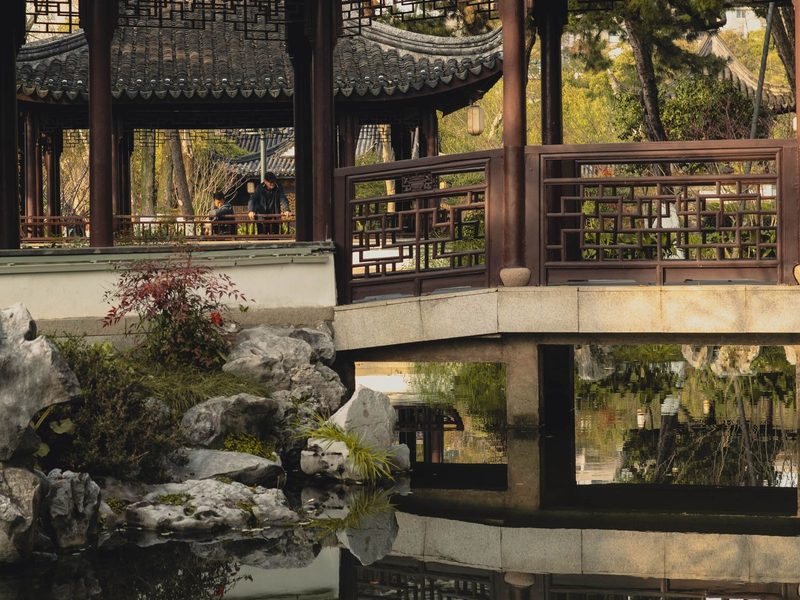
When you have had enough walking, sit down in a teahouse. Small storytelling halls along Pingjiang Road put on pingtan, with pipa and sanxian behind a storyteller working through an old tale in the Suzhou dialect. A set is about forty minutes and ¥50–80 (about $7.1–11) with tea. You will not follow the words, but watch the listeners closing their eyes and swaying — they know every line.
How to walk it
Come out of Lindun Road station on Metro Line 1 and the southern end is a few minutes away; walk north the whole way and it is barely over a kilometre. Duck into the cross lanes along the way — they lead into a residential district with laundry lines and bicycles, more like daily life than the main street. The whole road is free, and an hour and a half to two hours is a comfortable pace.
Before you go
Is there an entrance fee?
No, the whole street is free. A rowing boat costs extra, about ¥50 (about $7.1) for a stretch.
When is it least crowded?
Before nine in the morning, when the shops have just opened and the visitors have not arrived. Afternoons and weekends are busier, but the street is long enough — walk north and it thins out.
How do I find a pingtan performance?
Several small storytelling halls line the canal with the day's pieces and times posted at the door. A set lasts about forty minutes with a pot of tea. No booking needed; arrive early for a seat.
More in Suzhou
Want a plan that fits your dates?
Tell us your dates, budget and what you actually like doing — we will send back a day-by-day plan by email. No charge for the first draft.
Plan with us →